What is a channel manager?
A channel manager keeps your availability and rates in sync across every booking channel, preventing double bookings and rate drift across OTAs and your site.
By The Epic Trails team
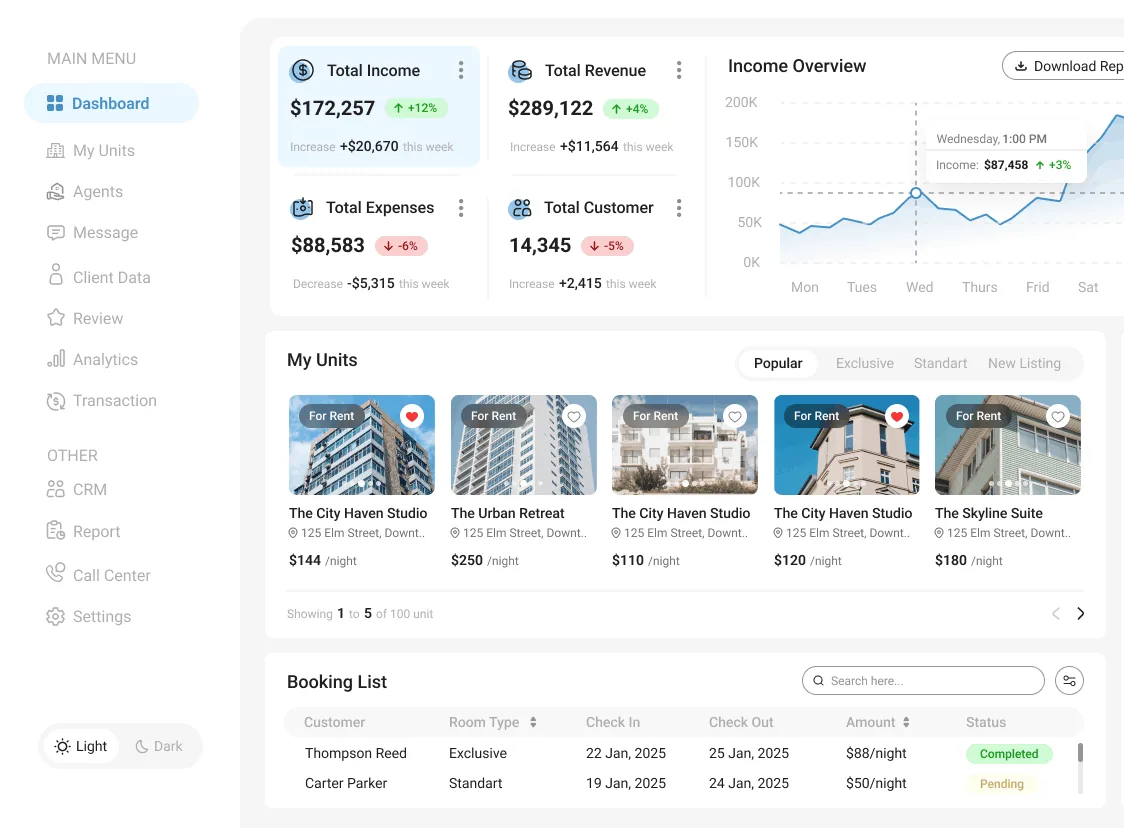
If you sell rooms, beds, apartments or tour seats in more than one place, you have a synchronisation problem. The unit you just sold on Booking.com is still showing as available on your own site, on Airbnb, and to the agent who emailed you yesterday. Two of those could sell it again in the next hour.
A channel manager is the software that solves that problem. The plain definition: a channel manager is the layer that keeps your availability, rates and restrictions in sync across every channel you sell through. Sell a unit anywhere, and every other channel updates within seconds. Change a price once, and it changes everywhere.
That is the whole job. Everything else a channel manager does supports that one outcome.
What a channel manager actually does
Strip away the marketing and a channel manager handles four flows, continuously, in both directions:
- Availability out: it pushes your live inventory to every connected channel, so an OTA never shows a unit you no longer have.
- Bookings in: when a channel sells something, the channel manager pulls that booking back and decrements availability everywhere else, fast enough that a double booking doesn't have time to happen.
- Rates and restrictions: one price change, one minimum-stay rule, one closed date, applied across every channel from a single screen instead of fifteen logins.
- Mapping: it translates your room types, rate plans and units into whatever each channel calls them, because no two platforms model inventory the same way.
The test of a good channel manager is boring on purpose: nothing surprising happens. No overbookings to apologise for, no rate that drifted out of line on one platform, no Sunday morning spent reconciling calendars by hand.
Channel manager, booking engine, PMS: where the lines sit
These three get blurred constantly, often because one vendor sells all three in a bundle. The distinction is still worth holding onto.
A channel manager distributes your availability out, to OTAs, marketplaces and partner sites, and pulls their bookings back in. An internet booking engine is the direct, on-your-own-site path from "I'm interested" to "I've paid", the bookings you take no commission hit on. A property management system runs operations after the booking: housekeeping, guest comms, the operational day-to-day.
Put simply: the booking engine owns your direct revenue, the channel manager owns your distributed revenue, and the PMS runs what happens once a booking exists. Plenty of products span two or three of those. The functions are still distinct, and knowing which layer is failing you is the first step to fixing it.
Hotels, Airbnb and serviced accommodation: the same problem, different shape
The phrase shows up with a lot of qualifiers. A hotel channel manager, an Airbnb channel manager, a serviced accommodation channel manager: people search for the version that matches their business because they assume the software is fundamentally different. Mostly it isn't. The synchronisation problem is identical. What changes is the channel mix and the inventory model.
A hotel is syncing room types and rate plans across Booking.com, Expedia and its own site. A short-let or serviced accommodation operator is syncing individual units across Airbnb, Vrbo, Booking.com and direct, often with per-property rules and cleaning windows that hotels don't have. A multi-property operator in the UK is doing all of that across a portfolio, where one channel manager has to behave consistently whether a building has four units or forty.
The connections differ. The job does not. When you evaluate channel manager software, the qualifier that matters isn't "hotel" or "Airbnb", it's whether the tool models your inventory honestly rather than forcing it into the shape it was originally built for.
What we look for in a channel manager
We run travel operations ourselves, and we build booking systems for the businesses we partner with. That gives us a fairly unsentimental checklist.
Speed that's actually real-time. "Near real-time" sync is where overbookings live. The gap between a sale on one channel and the update on the others is the window an operator gets burned in. It should be seconds, not a polling cycle.
A single source of truth for availability. The channel manager should read from the same inventory number as your direct booking engine and your phone bookings. One number, every channel reads from it. The moment availability lives in two places, the two places disagree.
Honest inventory mapping. Your room types, your unit names, your rate logic, represented as they actually are. If setting up the channel manager means distorting how you describe your own product, that distortion will cost you later.
No data lock-in. Booking history, rate history, channel performance: yours, exportable, API-reachable. A channel manager sees every booking you take. That data should never be held hostage by the platform that happens to route it.
Clear performance visibility. Which channels actually earn their commission, which are quietly cannibalising direct bookings you'd have won anyway. A channel manager that only syncs, without showing you what each channel is worth, is doing half the job.
The cost of not having one
Most operators don't decide against a channel manager. They just grow past the point where manual calendar updates were survivable without noticing the line. The symptoms arrive gradually: the occasional overbooking, rates that don't quite match across platforms, a team member whose unofficial job is "keep the calendars aligned."
None of that is dramatic on any single day. Over a season it's lost revenue, refunded bookings, and a reputation cost on the review platforms that no rate strategy recovers cheaply.
A channel manager isn't a growth tactic. It's the infrastructure that lets distribution scale without your operations quietly falling apart underneath it. For most operators selling across more than two or three channels, the question isn't whether to run one. It's whether the one running underneath you can keep pace with how much you now sell.
If you're weighing up your distribution stack and the seams are starting to show, book a discovery call. No pitch, just an honest read on what's worth fixing.